


















When Karaoke Hits the Asphalt
Sometimes you can see a structural shift unfold in real time. Not because the technology suddenly works from one day to the next, but because capital reacts. When markets move, it is rarely random. It is a signal that someone has understood the direction before the evidence is fully proven.

The absurd as a signal
Last week, something happened that on the surface seemed almost comical.
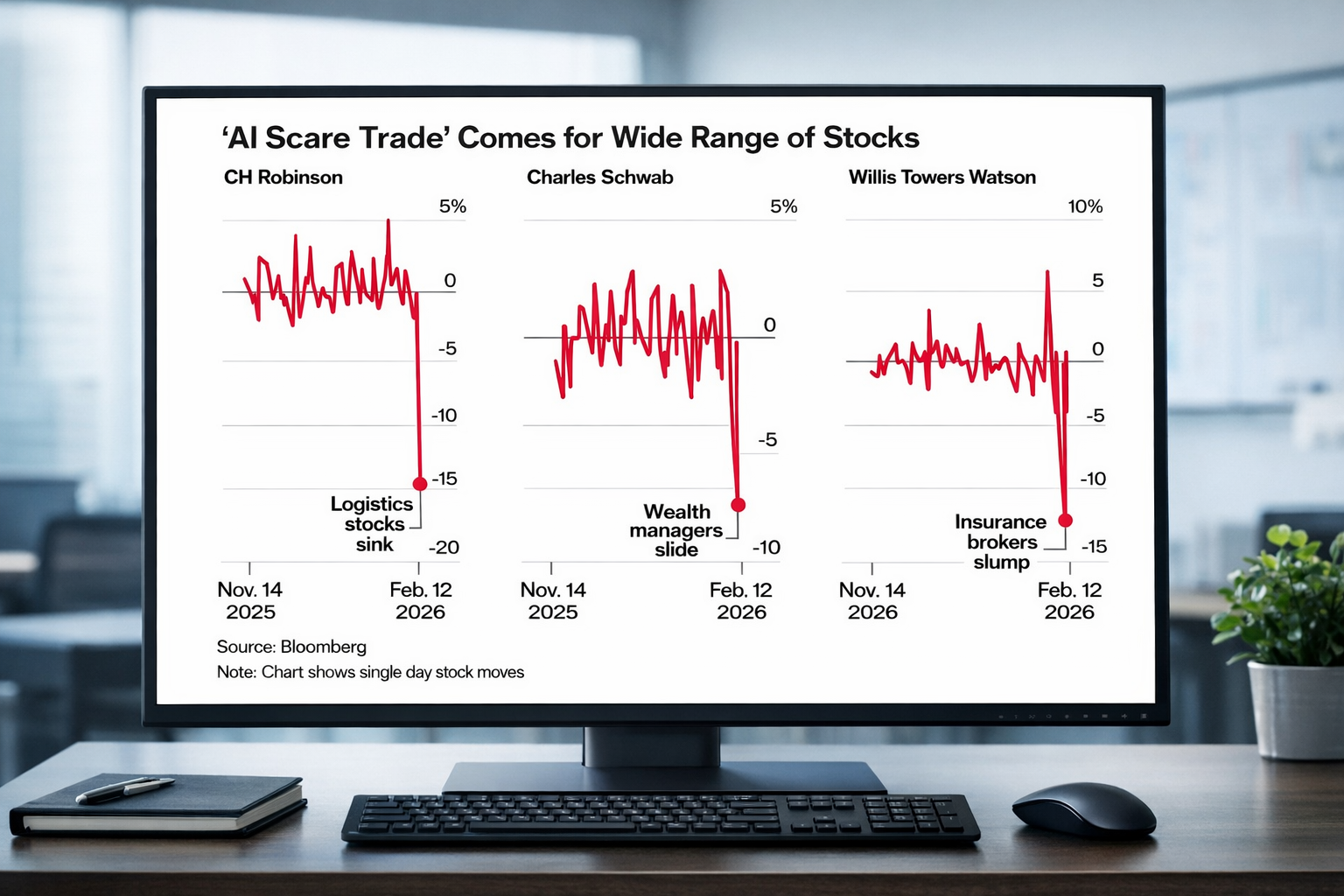
A company that previously sold karaoke machines, Algorhythm Holdings, released a white paper about its AI platform. The claim was that it could increase freight volume by 300 to 400 percent without hiring more drivers. Within hours, shares in C.H. Robinson, Charles Schwab and Willis Towers Watson declined.
It was not only logistics that reacted. Finance and insurance moved as well. An entire value chain shifted.
The idea that a former karaoke company could shake the transportation sector sounds like satire. But this is exactly how disruption works. It rarely comes from the obvious direction. It comes from the side, from those who are not constrained by the existing structure. Netflix did not emerge from Blockbuster. Airbnb did not come from the hotel chains. Tesla did not originate in Detroit. The absurd is not a flaw in the system. It is the mechanism.
Markets react to direction, not proof
Whether the numbers in the white paper hold up in practice remains to be seen. But that was not what the market reacted to. The market reacted to the possibility that network intelligence could unlock massive hidden capacity in an industry historically constrained by physical assets.
Transportation has long been defined by the number of trucks, the number of drivers, manual planning processes and empty miles. If AI can significantly reduce empty miles, new capacity emerges without new investment. In an industry with tight margins, even a 10 to 15 percent efficiency gain is dramatic. If we are talking about 30 percent or more, the entire competitive structure changes.
The market did not react to proof. It reacted to direction.
Why finance and insurance were hit ...
What is most interesting is that the reaction did not stop with logistics stocks. When network utilization changes, it affects risk models, credit assessments, insurance premiums and capital allocation. If transportation becomes more efficient and more predictable, the entire risk landscape shifts.
Fewer empty miles mean lower costs and greater stability. Greater stability affects creditworthiness. Predictability influences insurance pricing. Suddenly, this is not just about one industry. It is about an interconnected economic structure.
This was not a reaction to a single company. It was a reaction to the possibility of a structural shift.
The nervous and the patient
During periods of technological transition, the pattern repeats itself. The nervous react to shock. The patient build structure. A white paper is not proof, but it is a signal. And in network economies, signals matter.
If coordination becomes more important than capacity, power shifts from those who own the most assets to those who build the best architecture. That is where the real battle takes place. Not in the number of trucks, but in the ability to orchestrate them intelligently.
The structural shift in physical transportation
At Homerunner, we have long operated from one fundamental insight. Physical transportation is not primarily a capacity problem. It is a coordination problem. Trucks are not disappearing. Drivers are not disappearing. Asphalt is not disappearing. But empty miles can be reduced. Waiting time can be minimized. Decisions can be automated.
When AI connects to the network, a new layer of intelligence emerges. It is not magic. It is reduced waste. And in transportation, reduced waste equals increased value.
What we are witnessing is the beginning of a phase where network intelligence becomes as important as physical infrastructure. The companies that understand this will not necessarily be the ones that own the most assets. They will be the ones that build the strongest architecture.
The beginning of something larger
The story is not that one player has solved transportation. The story is that capital now accepts that network intelligence can alter the foundation of a physical industry. The structural shift in transportation is no longer theoretical. It is visible in market reactions.
The question is not whether AI will impact physical transportation. The question is who continues to build calmly while others react in panic. In transitional periods, it is rarely the fastest hands that win. It is those with the strongest architecture and the greatest patience.
That is where the future of transportation is being shaped.